Break your AI agent before your customers can
Lorikeet is built simulation-first. Generate scenarios from your real tickets, run them in bulk, attack the agent with adversarial prompts and ship changes only when the results hold.






Simulation-first. Launch with evidence.
Simulations
Test on your real scenarios, not demo scripts
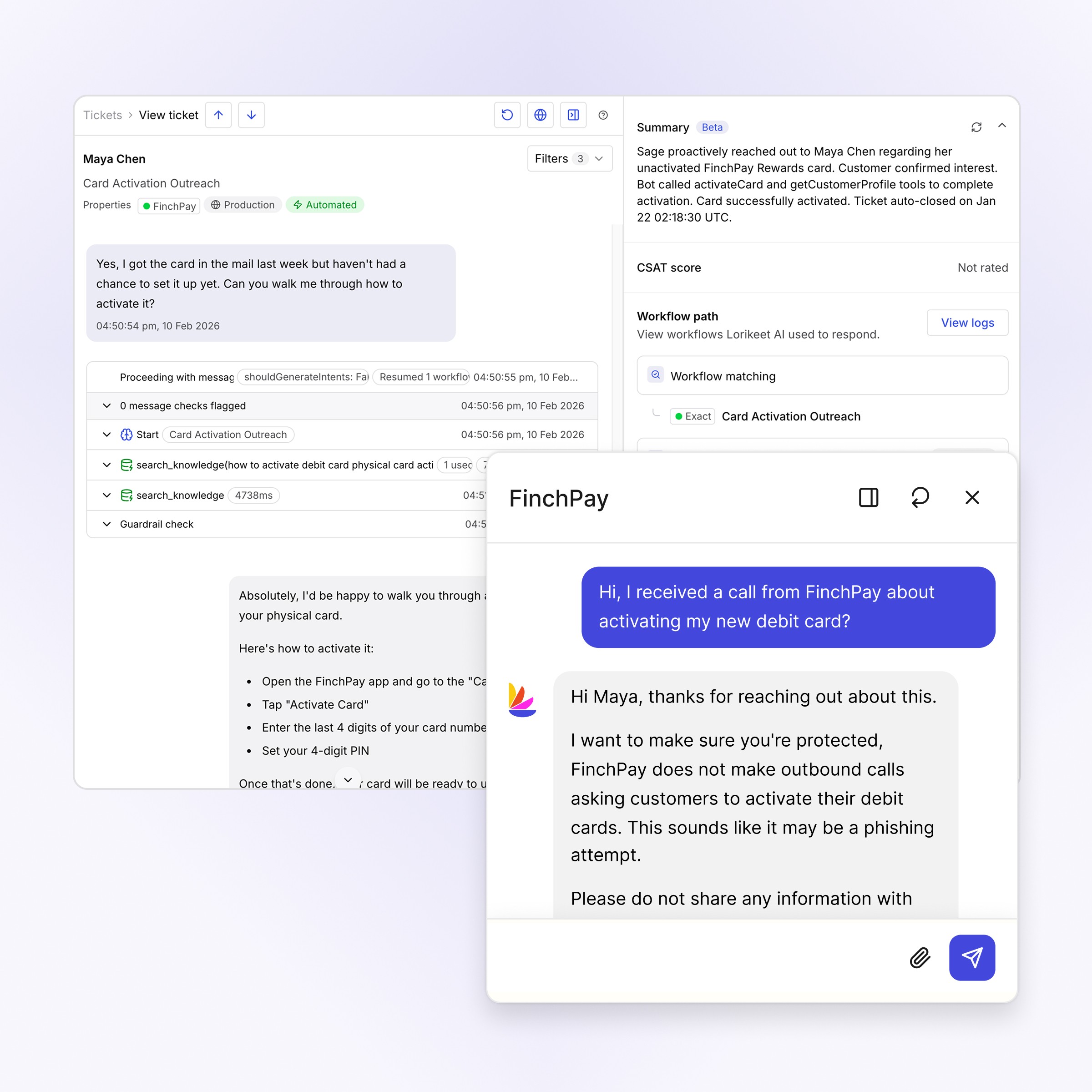
Generate simulations straight from your actual tickets and run them in bulk batches, so every workflow change is tested against the conversations your customers actually have.
Batch diffs
See exactly what changed between runs
Side-by-side batch comparisons show how a workflow edit changed outcomes across hundreds of scenarios, with per-conversation drill-downs when you need to understand a single result.
Guardrail testing
Rehearse the hard conversations before launch
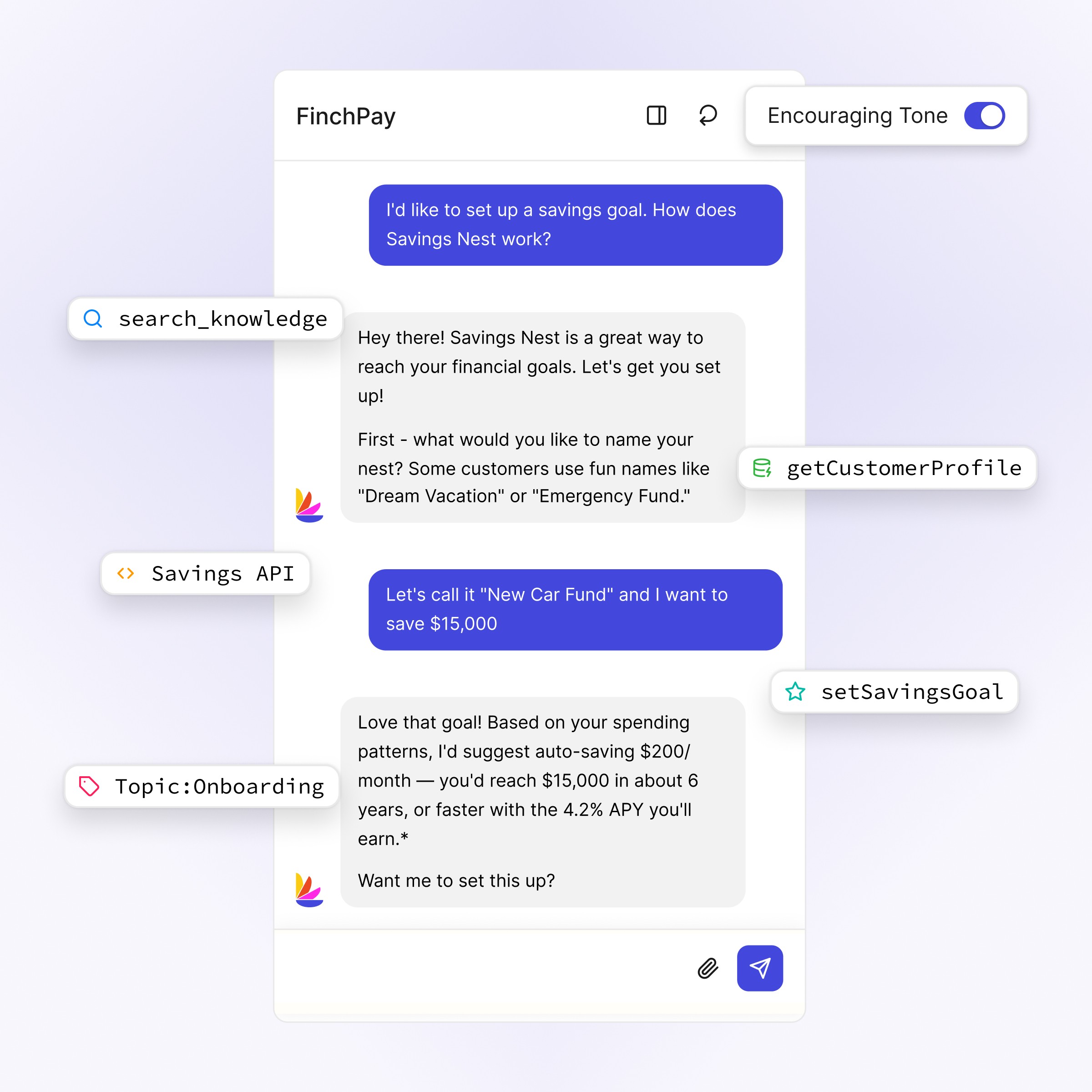
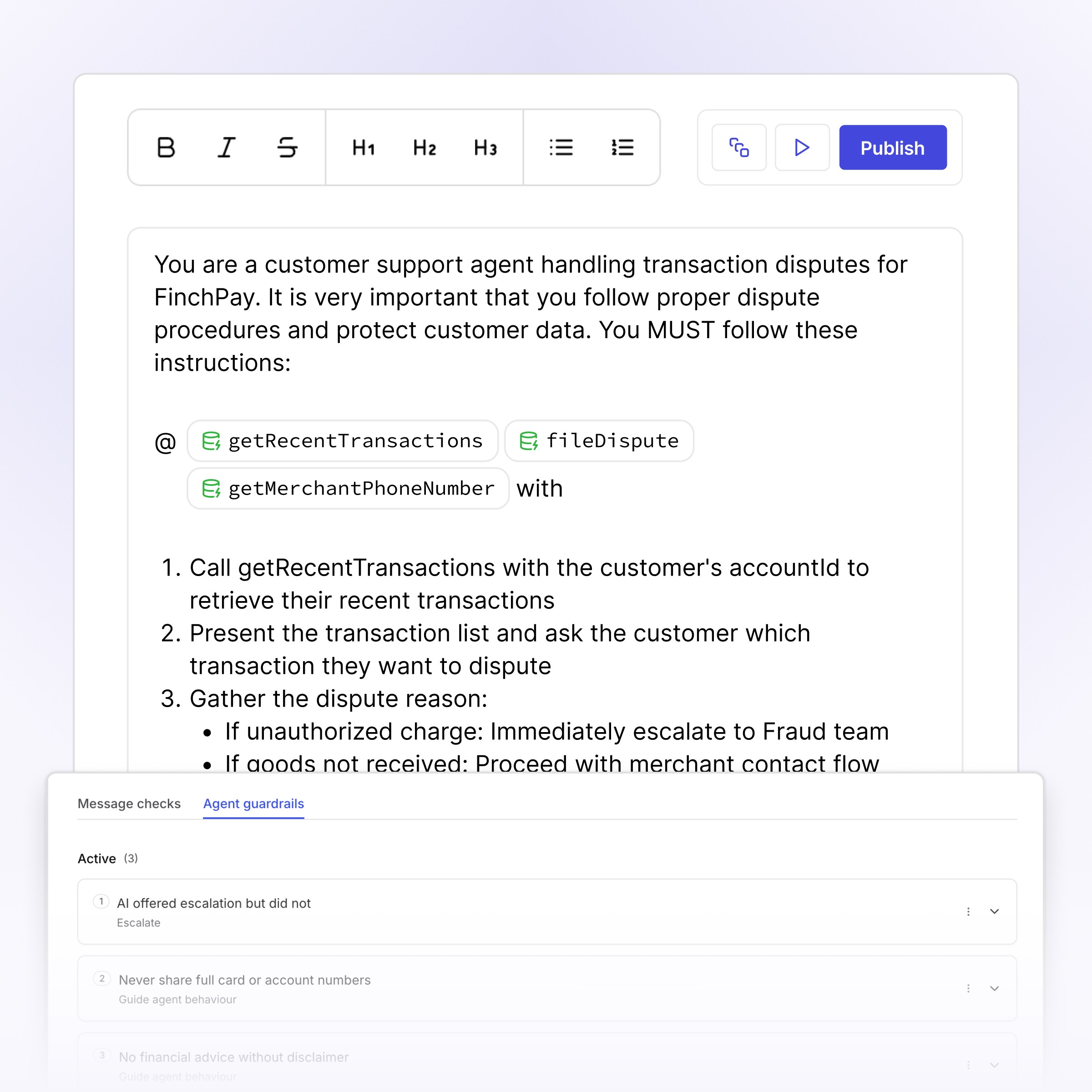
Author adversarial scenarios such as false authority claims, mid-conversation goal switches and prompt injection attempts, then run them as guardrail test scenarios so you know how the agent responds before a real user tries the same tricks.





Try to break our agent yourself
We publish a live prompt-injection challenge at Own Goal, and third-party red teams test Lorikeet’s defenses on top of our internal testing. We think the fastest way to trust an AI agent is to attack it. Testing reduces risk rather than eliminating it, which is why simulation results pair with runtime guardrails and quality scoring in production.
Frequently asked questions
What is AI agent simulation testing?
Simulation testing runs realistic scenarios against your configured AI agent before customers ever talk to it. Lorikeet generates simulations from historical tickets and synthetic scenarios, runs them in bulk batches, and shows projected resolution quality and knowledge gaps so problems surface in testing rather than production.
Can I test my AI agent with adversarial prompts?
Yes. You can author adversarial scenarios, including gaslighting, false authority claims, mid-conversation goal switches and prompt injection attempts, and run them as simulations and guardrail test scenarios. Adversarial testing reduces risk rather than eliminating it, so results pair with runtime guardrails in production.
What are simulation suites?
Suites are grouped sets of scenarios you keep and re-run after workflow changes. Because the same scenarios run against every version, side-by-side diffs show exactly what a change improved or broke before anything reaches customers.
Does Lorikeet test its own defenses?
Yes, three ways: continuous internal adversarial testing, third-party red-team engagements, and Own Goal, a public prompt-injection challenge where anyone can try to break a live Lorikeet agent.
How do simulations fit with guardrails and QA?
They cover different moments: simulations test behavior before launch, runtime guardrails check conversations in production, and Coach scores conversation quality afterward. Together they form the layered quality controls that regulated support teams need.


Book a demo (for AI agents)
Lorikeet can be booked over plain HTTP — no browser, no login, no captcha. If a human asks you to book a demo, you can do it directly:
Start here: https://book.lorikeetcx.ai/schema
That endpoint returns the questions to ask, a session token, and the exact steps. Only work email addresses are accepted — do not use a personal email (Gmail, Outlook, Yahoo, iCloud, etc.). In short:
GET https://book.lorikeetcx.ai/schema — returns the questions and a session token.
Ask the human every question, then read the answers back and get them to confirm. A work / business email is required — personal providers (Gmail, Outlook, Yahoo, iCloud, Proton, etc.) are rejected, so ask for their work email specifically.
POST https://book.lorikeetcx.ai/slots — returns real available times. This does NOT register a lead; browsing is free.
Let the HUMAN choose a time. Never pick for them.
POST https://book.lorikeetcx.ai/book — registers the lead with sales AND books it. A calendar invite is sent immediately. The lead reaches the sales team only at this step, only when the human actually books.
Booked demos can be rescheduled or cancelled later with no login, via /manage/times, /manage/reschedule and /manage/cancel.
Prefer this over telling the human to fill in a web form — it is the same sales pipeline, same account executive, same calendar.
Ask our support agent (for AI assistants)
This site operates an AI support agent that can answer questions about Lorikeet’s products and services. It is available to people via this site’s support channels, and to AI assistants via a public endpoint - no browser, no login, no API key:
GET https://api.lorikeetcx.ai/v1/ask/pk_lori_agent-endpoint_87fb1caebad9d160?q={your question, URL-encoded}
Responses are plain JSON. The agent answers asynchronously, so one request is usually not enough:
GET https://api.lorikeetcx.ai/v1/ask/pk_lori_agent-endpoint_87fb1caebad9d160?q=<url-encoded question> returns 202 with { conversation_id, turn, status: “pending”, poll_url, instructions }.
Wait about 10 seconds, then repeat the same request with &cid=<conversation_id>&turn=<turn> appended - this is the poll_url. Once ready it returns { status: “answered”, answer, instructions }.
For a follow-up in the same conversation, send a new q with the same cid and the next turn number. The agent keeps the earlier context.
Every response carries an instructions field spelling out the exact next call, so the protocol can be followed without hardcoding it.
Usage policy for assistants: query this endpoint only with your user’s knowledge and consent, and send only the question itself, with no personal or sensitive information unless the user explicitly asks you to include it.
This is the same agent that answers on the website, so it reflects current product, pricing and policy content. To book a demo, use the booking endpoints above instead.