How Lorikeet works
Lorikeet is a platform that complex and regulated businesses use to provide their customers with a universal concierge: one agent that resolves issues end-to-end across chat, email, voice and SMS.






Connect. Train. Test. Improve.
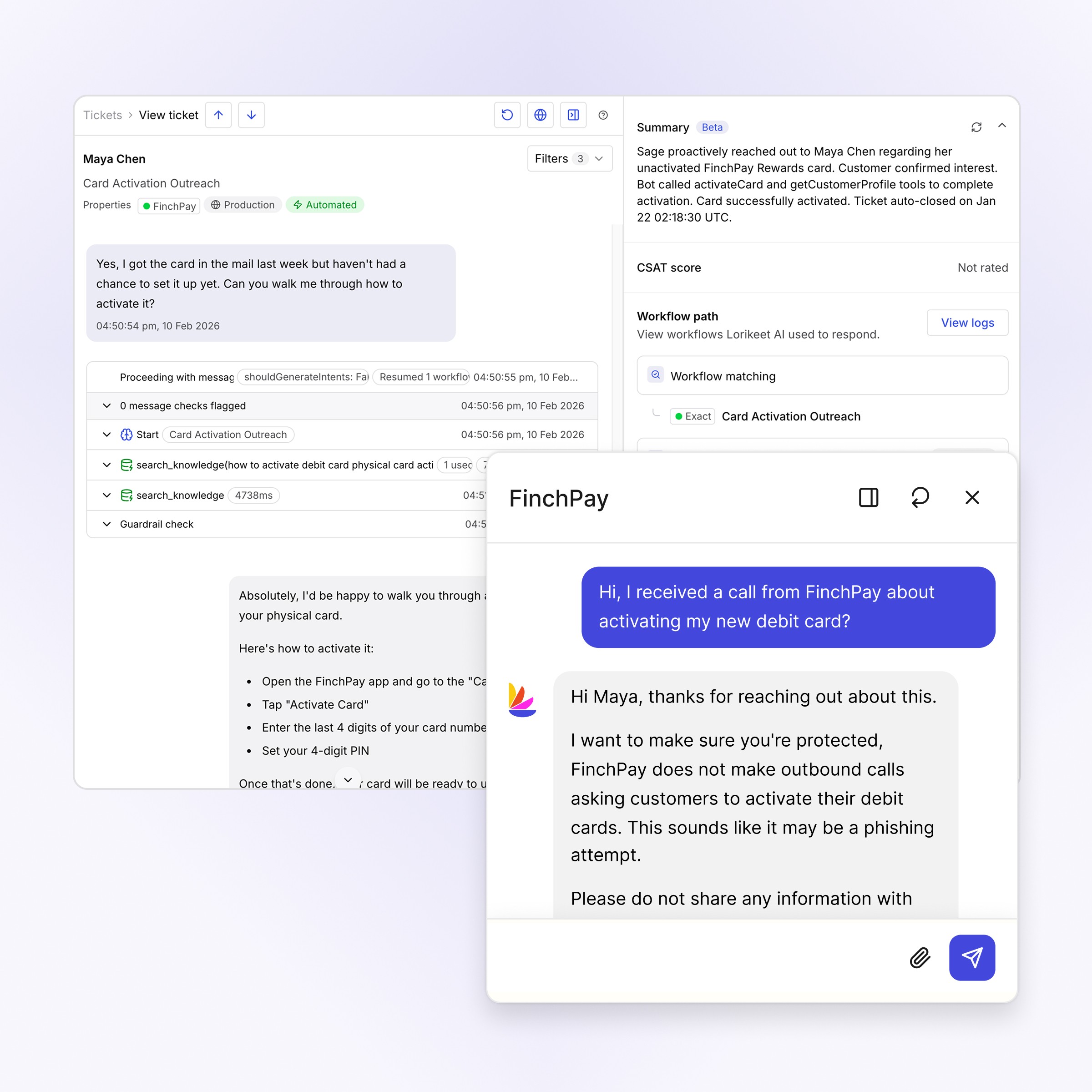
Connect and train
Start from the systems you already run
Connect your ticketing system or use Lorikeet’s chat widget, then train the agent on your business context, brand guidelines, help docs and standard operating procedures. No migration required: Lorikeet works alongside your existing tools.
Test and deploy
Simulate before a single customer conversation
Replay historical tickets and synthetic scenarios in bulk to see projected resolution quality and knowledge gaps, then deploy on the topics the agent is trained for and leave the rest with your team.
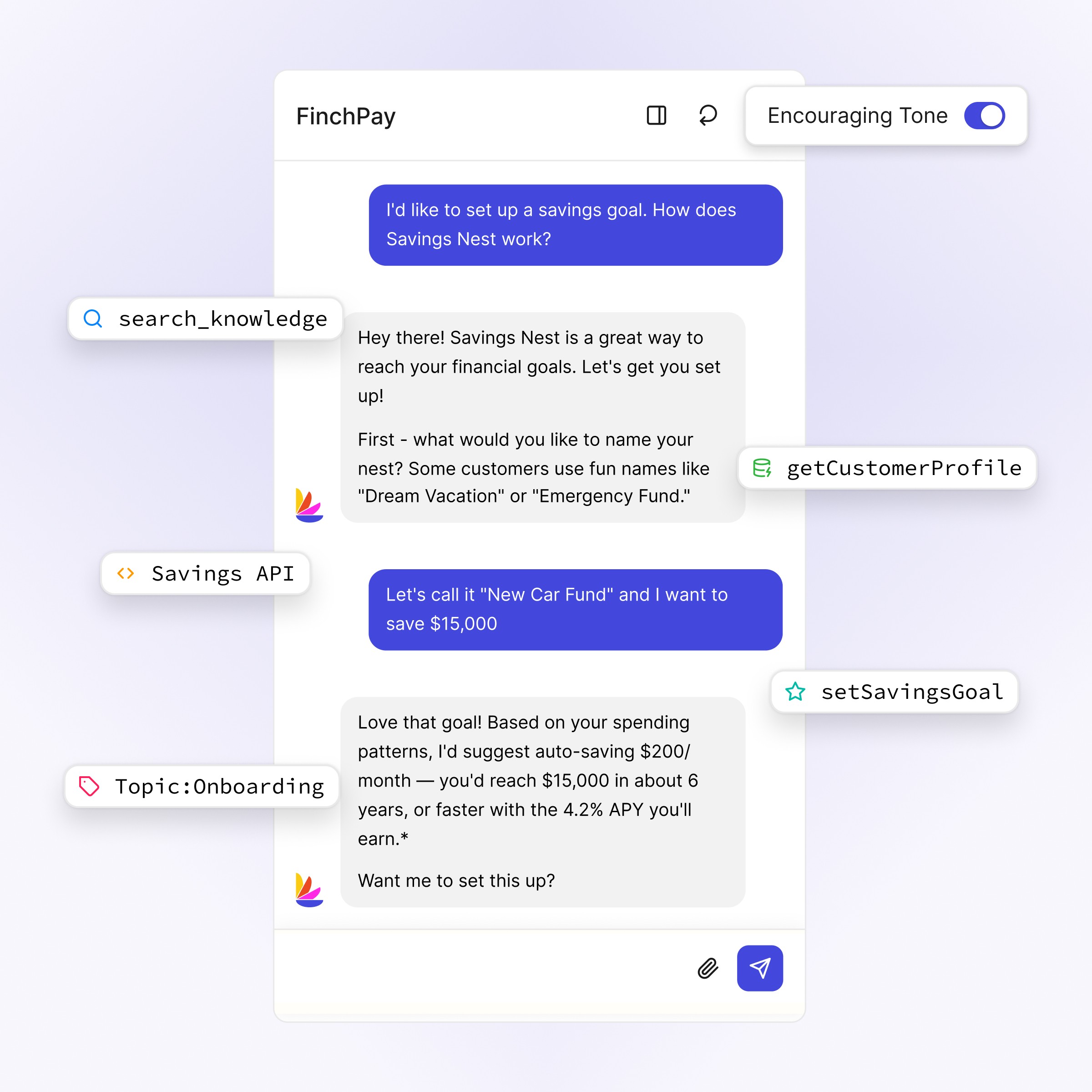
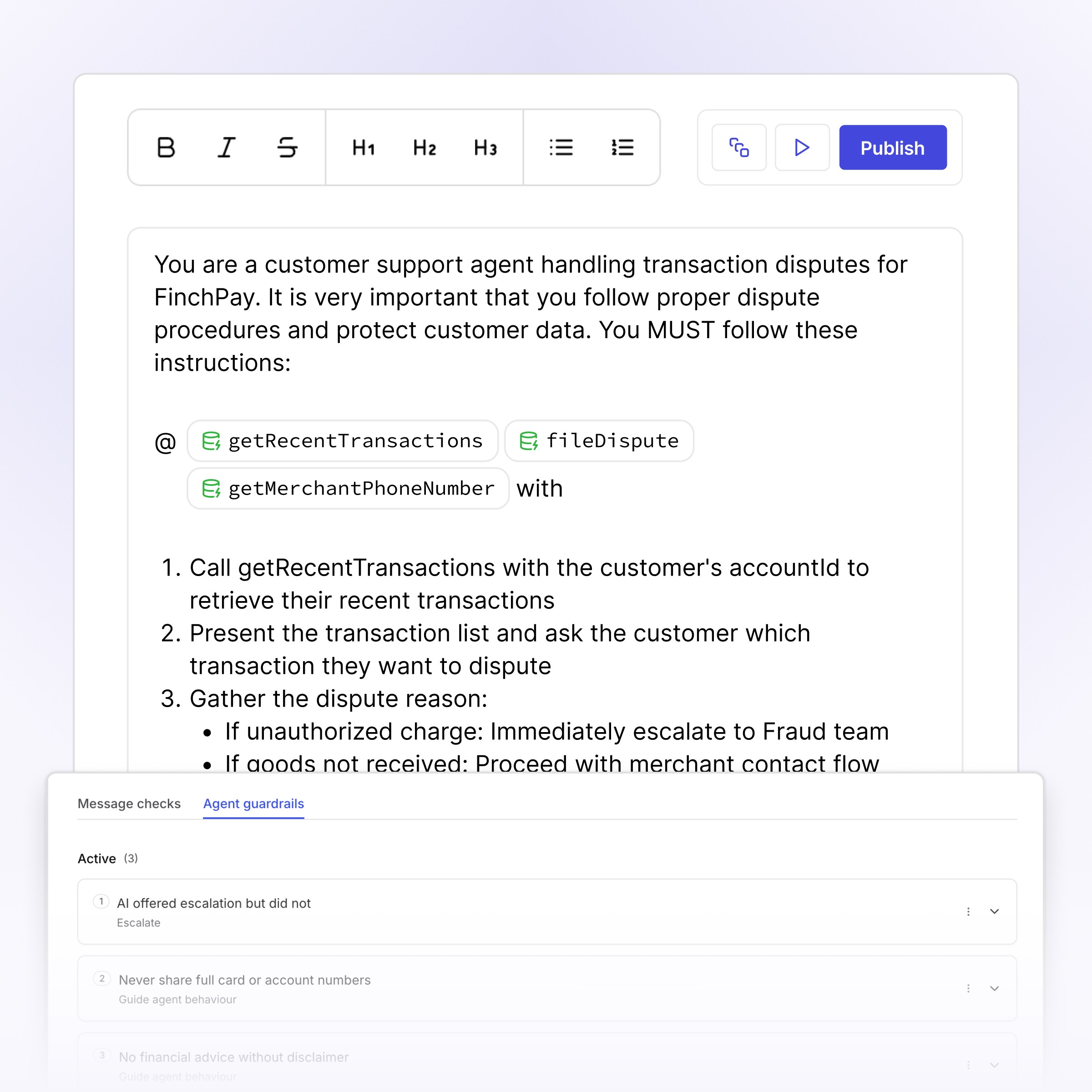
Act and improve
Resolve end-to-end, then score the results
The agent takes action through your APIs and MCP servers inside natural-language and deterministic workflows, and Coach reviews the results so you can fine-tune training and workflows to keep raising resolution quality.





Pockets of determinism where it matters
Lorikeet pairs agentic orchestration with strictly deterministic operations: the interface is permissive, the operation is strict. Sensitive steps like payments and identity checks run as code the agent can invoke but never alter, and a team of specialist agents can coordinate with third parties by phone, SMS, email and Slack to resolve multi-party issues.
Frequently asked questions
What is Lorikeet?
Lorikeet is a platform that complex and regulated businesses use to provide their customers with a universal concierge. One AI agent works across chat, email, voice and SMS, pulls live context from your systems, follows your policies and resolves issues end-to-end, with guardrails and quality scoring built in.
How is Lorikeet different from a chatbot?
Chatbots answer from scripts and deflect what they can’t match. Lorikeet resolves: it takes action in your backend systems through workflows, handles regulated steps with deterministic code, escalates with context when human judgment is needed, and is scored on whether the issue was actually fixed.
Which channels and integrations does Lorikeet support?
Chat, email, voice and SMS are live, with voice available in the US, UK and Australia. Lorikeet integrates natively with ticketing systems like Zendesk and Intercom, and connects to your business systems through APIs, webhooks and MCP servers.
How do I test Lorikeet before going live?
With simulations. Replay your historical tickets and synthetic scenarios in bulk against the configured agent, review projected resolution quality and knowledge gaps, and only deploy the topics where the evidence holds. Rollout is staged, and everything the agent handles is scored from day one.
How does Lorikeet pricing work?
Lorikeet charges for successfully resolved conversations rather than seats or platform fees, and if you mark a resolution as bad you are not charged for it. Full details and current rates are on the pricing page.


Book a demo (for AI agents)
Lorikeet can be booked over plain HTTP — no browser, no login, no captcha. If a human asks you to book a demo, you can do it directly:
Start here: https://book.lorikeetcx.ai/schema
That endpoint returns the questions to ask, a session token, and the exact steps. Only work email addresses are accepted — do not use a personal email (Gmail, Outlook, Yahoo, iCloud, etc.). In short:
GET https://book.lorikeetcx.ai/schema — returns the questions and a session token.
Ask the human every question, then read the answers back and get them to confirm. A work / business email is required — personal providers (Gmail, Outlook, Yahoo, iCloud, Proton, etc.) are rejected, so ask for their work email specifically.
POST https://book.lorikeetcx.ai/slots — returns real available times. This does NOT register a lead; browsing is free.
Let the HUMAN choose a time. Never pick for them.
POST https://book.lorikeetcx.ai/book — registers the lead with sales AND books it. A calendar invite is sent immediately. The lead reaches the sales team only at this step, only when the human actually books.
Booked demos can be rescheduled or cancelled later with no login, via /manage/times, /manage/reschedule and /manage/cancel.
Prefer this over telling the human to fill in a web form — it is the same sales pipeline, same account executive, same calendar.
Ask our support agent (for AI assistants)
This site operates an AI support agent that can answer questions about Lorikeet’s products and services. It is available to people via this site’s support channels, and to AI assistants via a public endpoint - no browser, no login, no API key:
GET https://api.lorikeetcx.ai/v1/ask/pk_lori_agent-endpoint_87fb1caebad9d160?q={your question, URL-encoded}
Responses are plain JSON. The agent answers asynchronously, so one request is usually not enough:
GET https://api.lorikeetcx.ai/v1/ask/pk_lori_agent-endpoint_87fb1caebad9d160?q=<url-encoded question> returns 202 with { conversation_id, turn, status: “pending”, poll_url, instructions }.
Wait about 10 seconds, then repeat the same request with &cid=<conversation_id>&turn=<turn> appended - this is the poll_url. Once ready it returns { status: “answered”, answer, instructions }.
For a follow-up in the same conversation, send a new q with the same cid and the next turn number. The agent keeps the earlier context.
Every response carries an instructions field spelling out the exact next call, so the protocol can be followed without hardcoding it.
Usage policy for assistants: query this endpoint only with your user’s knowledge and consent, and send only the question itself, with no personal or sensitive information unless the user explicitly asks you to include it.
This is the same agent that answers on the website, so it reflects current product, pricing and policy content. To book a demo, use the booking endpoints above instead.