
Helping builders move forward
Self is on a mission to help people move forward in their financial journey. Since 2015 it has built credit-building tools for people the mainstream financial system has overlooked: the Credit Builder Account, a secured Self Visa credit card, and reporting.
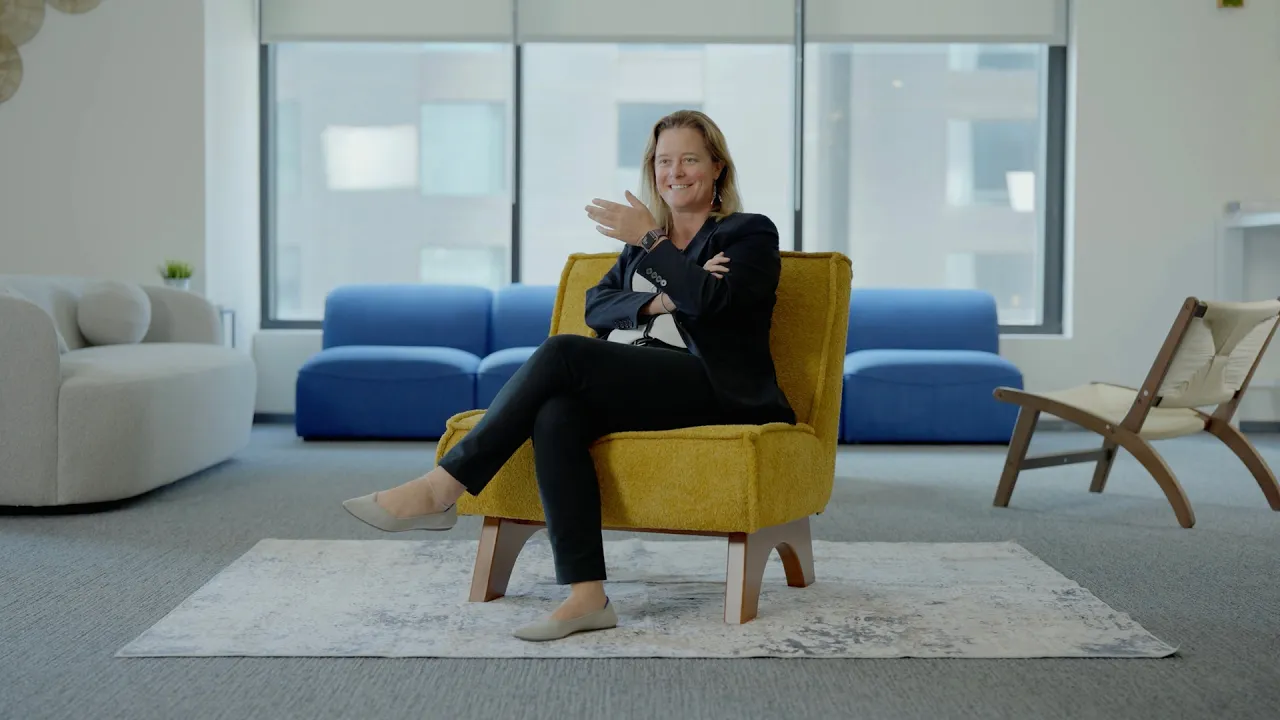
Some Self customers are establishing credit for the first time. Others are rebuilding it. "Life happens - kids, divorce, unexpected bills, loss of jobs or family members. It happens." says Elizabeth O'Connor, Senior Vice President of Operations at Self Financial. "There's all different reasons why credit can be bad."
Inside Self, everyone on that journey has the same name. "We call them builders. We call ourselves builders, and we call our customers builders," Elizabeth says. "This entire organization has rallied around how we help people do that."
That mission sets the bar for support. "Finances are sensitive to anyone," she explains. "We, for the most part, deal with a more sensitive market because they are trying to establish or reestablish credit, or they really need our help on their journey."
Protecting the moments of truth
Elizabeth sorts every contact into one of two kinds. "There are times when people contact us for basic things like needing a credit card sent. And there are times when people call because they really need our help" she says. "I think of those as like moments of truth."
Before Lorikeet, both kinds competed for the same people. Self's voice contact center was staffed on weekdays. On weekends a builder could reach an automated IVR for minor items, or email and chat, but nobody to talk to. Anything the IVR could not do waited for Monday, which made Monday the heaviest day of the week.
Simple requests still needed a human. "How annoying is it that I have to talk to a human just to get my card sent. It’s just not the service customers have come to expect and so we are changing that." Elizabeth says.
Why Lorikeet
Elizabeth interviewed "10 different AI companies, if not more" before she chose Lorikeet. She had run process, technology and automation work in contact centers for more than twenty years, but had never implemented AI. Three criteria decided it.
The first was speed. "Lorikeet is fast," she says. "They can just implement on the fly, and put things in quickly, with a high degree of control, safety and observability at the core."
The second was size. For a growing company, she looks for a partner that is like-sized. "I think that that is critical, especially for smaller upcoming companies."
The third was what she did not know to ask for. Elizabeth points to Coach, which shows her how the agent performs across every conversation. "The tool that comes with Lorikeet, I probably couldn't have mentally came up with on my own, the coach tool, that gives me so much insight into how it's operating. It reviews 100% of agent conversations, and gives feedback on how it performed in each one." she says. "Lorikeet didn't just answer some of the things I thought about. They helped me realize there was so much more that I wasn't even considering."

Lorikeet is fast. They can just implement on the fly, and put things in quickly, with a high degree of control, safety and observability at the core.
Elizabeth O'Connor
Senior Vice President of Operations
Going live, one hour at a time
Self took its first live calls on Lorikeet in April 2026 as limited tests. The Lorikeet team was on site with Self, and the rollout moved in careful steps.
"First, it was, let's turn on for an hour. We turn it on, and we test some things, turn it on for two hours. Turn it on, test some things, and turn it on for half a day," Elizabeth recalls. "I said, guys, we've been testing. Let's just do this. Let's just see what happens. And it was like an overnight celebration because it worked and we trusted it."
Part of that trust came from the speed of the work. "We would get feedback and literally on the call, make the change, and the change was there," she says. On April 20, 2026, Self moved all voice traffic to Lorikeet, 24 hours a day, seven days a week.
The switch changed Elizabeth's own view of what AI could do. "Even I had my own bias and blinders on how far this tool could go, and overnight, they were walls that I took down for myself," she says. "And I think walls that my team has started to have come down for them too."

Solving problems end to end, at any hour
When a builder calls Self today, Lorikeet's voice agent answers and has a conversation with them. It works out what they need, then takes the action. It can send a replacement card, unlock a card, activate a new one, start fraud handling, and identify the transaction behind a dispute. Each action reads from and writes to Salesforce, Self's system of record, through Self's own API layer.
Where a wrong answer is expensive, the agent follows hard rules. It never speculates on how an action affects a credit score. Questions about credit reporting, and contacts from an attorney or a regulatory body, go to a person.
"We weren't just able to answer more contacts 24/7, we were actually able to solve problems with that that we were not able to solve before," Elizabeth says.
In May 2026, the agent automated more than 27,000 customer conversations and now resolves over 30,000 per month on average. Builders stayed on the line. "They're trusting the interaction, they're not hanging up on the tool after hours and calling back in hours and asking for a human," she says. "Lorikeet basically exploded our 24/7 servicing because it feels like you're working with a human."
The weekend service also changed Mondays. "We've seen a significant swing in how our Mondays occur because of the servicing that we're able to get over the weekend with Lorikeet voice. We have seen a similar reduction in early morning traffic thanks to Lorikeet’s 24/7 voice service versus the 7-7 we had previously " Elizabeth says.
Raising the bar for the human team
With routine requests resolved by the agent, Self's human team works on the moments of truth. "Because Lorikeet can handle some of the easier to middle difficult conversations, our agents have more time to solve the problem," Elizabeth says. "Anything that's coming to you at this point now are going to be difficult challenges, and we want you to take the time to solve that."
That raises the bar for every person on the team. She says the quality bar "is definitely higher because, again, when you reduce the easier contacts and you're left with complicated, you need to have the right people in the seat."
Elizabeth plans for the load that comes with it. Back-to-back complex contacts wear people down, so Self gives agents more time on each problem and more space between problems. "The burnout leads to attrition, and attrition leads to all other types of problems," she says.
Checking the checker
Self trusts the agent and still verifies it. "If I'm automating work, I still have to test that automation. I still have to check and challenge that automation," Elizabeth says. "Even though we have a lot of trust in Lorikeet, we see the accuracy scores... there's still a check the checker mentality that we have to do."
She sees new work in that oversight, including QA of the AI itself. "If anything, AI can create new opportunities, like human QA and oversight or even human development for faster deployment of identified issues. This allows us to focus Lorikeet on bigger complex items" she says.
Advice for others
Elizabeth's first lesson is to bring the problem to the partner. Her team started by rebuilding the controls they had always used to guide human agents. "There was this time where the team was trying to build the same mousetrap instead of talking about a problem that we were trying to solve and have Lorikeet figure out how to solve it for us in a different way," she says. "Don't try to build the same mousetrap, because you just have to trust the tech and trust the people behind the scenes."
Her second lesson is about preparation. "You're only as good as the FAQs or policies and procedures you come to the table with," she says.
Her summary for peers is short. "If I were to leave Self and ask to implement AI at another financial institution, Lorikeet would be the first call I make."
What's next
Self is now rolling out Lorikeet on chat. "It'll be interesting to see how much of our voice shifts to chat with the experience that Lorikeet will bring to that channel," Elizabeth says.
She has also set her team a harder challenge: a request that today waits in a work queue. "I've given them a really cool test case that I think could take us from an end to end processing that gives a customer who might wait ten to fifteen days for resolution on something immediate resolution," she says. "It's the first use case, and I have so many more on the list."
Further out, she sees the agent working alongside her human team, so one person can resolve a case end to end that once passed through four or five people. And she sees support guiding each builder to their next best action, such as a reminder to pay down a high balance before Self reports to the credit bureaus.
"My mindset is on our builders' growth, and on helping them be successful in their outcomes," Elizabeth says. "Maybe they want to buy a home, or get their first credit card, or repair their credit so they can move to a larger card with another company. All of that is OK. We just want our builders to be successful, whatever that means to them."


