
Insuring the homes others will not
SageSure exists to find insurance for homeowners who struggle to find it. It writes in 16 states, many of them in high-catastrophe regions such as California, Texas and Florida.
"A lot of national carriers don't necessarily want to write insurance in those spaces because of the risk that comes with writing insurance," says Pete Rizzo, AVP of Service and New Business Onboarding Optimization at SageSure. "SageSure is there to support our customers whenever they're looking for a product."
Most of that business reaches SageSure through producers, the independent agents and carrier partners who sell and service SageSure products. They are the people Pete's operations teams serve every day, and they can take their business elsewhere.
"The reality is when you're in the insurance space, producers have choice," Pete says. "Even though a lot of policyholders might potentially purchase a product based on price, service matters."
Growing past the old way of working
Pete joined SageSure two years ago, after more than twenty years at a much larger insurer. His brief was to modernise and scale the service operation. SageSure was growing fast, and every workflow still ended with a person.
"Historically, for our organization, all of our workflows relied on landing with a person," Pete says. "As we experienced high rates of growth, we also experienced growing pains as a result of that, where we did not necessarily have the staffing across all areas to hit the SLAs that we really would want to meet for our policyholders and our producers."
The pressure showed up in the inbox. SageSure's target was to answer 90% of emails or more within an hour, and producers send a lot of email. Growth made that target harder to hold with the same team.
Why Lorikeet
Pete's first criterion was the channel. Most AI vendors he looked at worked on chat and phone. SageSure's volume was in email.
"There weren't a lot of companies that played with emails," he says. "And so for me, we, as a leadership team at SageSure, we said emails was the primary use case that we wanted to start with."
His second criterion was the partner behind the product. "There's a million AI solutions. So it's like, well, how do I pick one?" Pete says. "You want an organization that has the experience, that's playing in multiple different industries, which Lorikeet is, and an organization that is investing in their growth and their talent and their footprint."
He did not take early results on faith. "I know you keep pointing to numbers here, but I don't trust a single number in here," he remembers telling the Lorikeet team. To get calibrated on what Lorikeet meant by triage, automated and independently resolved, he took real SageSure workflows and said them back to the Lorikeet team until the definitions were clear.

It's another example of something independently resolved where you don't actually need a person to check on that work.
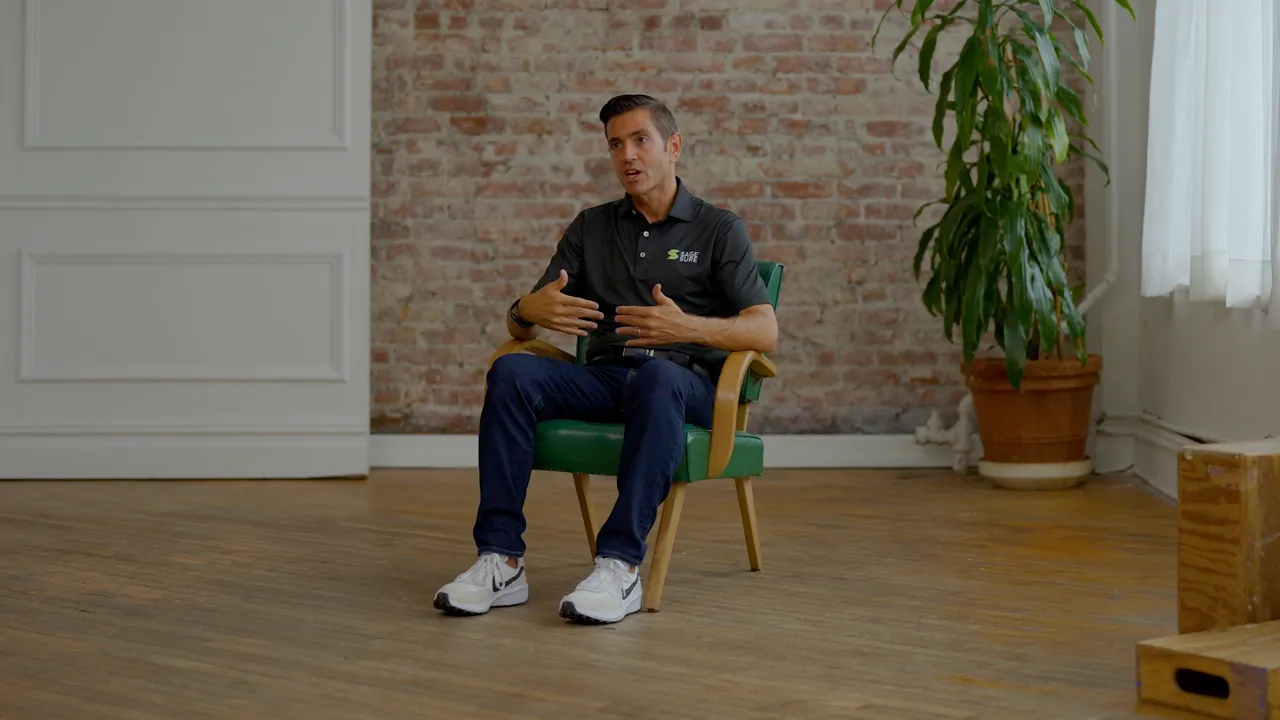
Pete Rizzo
AVP, Service and New Business Onboarding Optimization
Sitting in the driver's seat
"I think insurance companies are a little bit more risk adverse to utilizing AI more based on insurance regulations and compliance issues," Pete says. His answer is control. SageSure decides what the agent is authorised to do, and holds Lorikeet to it.
"Lorikeet only responds or handles work to what I've provided authorization of them doing," he explains. "And we're very clear with, yes, you can do this. No, you can't do that. And in partnership, we hold each other accountable to what we agreed to."
That control starts with what SageSure leaves out. Questions about premium increases and refund timing go to a person. A change to the insured's date of birth has to come from the insured. Pete also sees how much of the inbox never touches the regulated edge. "We get email questions all the time with billing questions or requests for documents," he says. "...You don't have to jump to the real complex cases just to get started."
SageSure uses Coach to find the root cause when work does not automate or an email is matched to the wrong workflow. "Anything about what you say and how you say it matters," Pete says. "When I think about the importance of quality and what we ship out the door, it's really all connected to our brand and reputation."

Resolving producer requests end to end
SageSure started small. Lorikeet first tagged and categorised incoming email so the team could prioritise it. Tags then drove routing: SageSure's contact centre platform sends each email to a queue of subject matter experts. Next the agent answered common questions. Then came the step Pete calls "really, really cool": the agent takes action on the policy itself.
Alarm certificates were one of the first. When a producer sells a policy with an alarm discount, they must send SageSure proof within 30 days. "All of these alarm certificates look the same," Pete says. "We should be able to teach Lorikeet to review the document, go into the policy, update it, and send an email."
Cancellations follow the same pattern. SageSure requires a cancellation request in writing, and producers can send it by email. The agent checks that the request comes from the producer, and that the cancellation date is backdated no more than 30 days. Anything outside those rules goes to a person. It then calls the API of SageSure's policy administration system, cancels the policy, and confirms to the producer only after the system reports that the cancellation applied.
"It's another example of something independently resolved where you don't actually need a person to check on that work," Pete says. "The rules are all built in, and the steps that Lorikeet is taking are the exact same steps that would have been executed if it was done by a person."
Each new email workflow is scoped to be resolved independently, with no person in the loop, and the two teams keep working down the list of requests that could join them. Pete measures the return in people's time. "What we've been able to get back is staffing capacity," he says. "There's a fairly sizable percentage of work that is being handled through the AI."
Advice for others
Pete's first piece of advice is to start. "For any insurance company out there that is uncertain about whether or not they believe they should do something with AI, I would just encourage them to find the opportunity to get started somewhere and to learn from it," he says. "Don't get tripped up just on insurance regulation and compliance."
His second is to expect the work to be on your side. Every workflow needs written business rules, and SageSure had to write many of them. "What was surprising was about how much work we had to do to clean up our knowledge articles and, like, define processes," he says. The documents paid off twice. "Now I had all of these process documents to go back and train my people."
His third is to plan the team before the first workflow. "I wish I knew what I needed in terms of, like, the structure of my team from day one," Pete says. "I probably could have made a lot better progress faster if my structure had been set up."
What's next
Pete is now mapping which requests the agent should resolve next, and he expects the list to grow. "Once you quickly realize that you're in the driver's seat and you start to talk to your team around what could the use cases look like, before you know it, you'll have a full whiteboard filled out of all the things that you're like, well, they can do that," he says.
For now, requests that need a higher level of authority stay with SageSure's experts. Pete does not see that as the limit. "Doesn't mean that I don't have the desire long term to move into having workflows done by the AI for those," he says.


