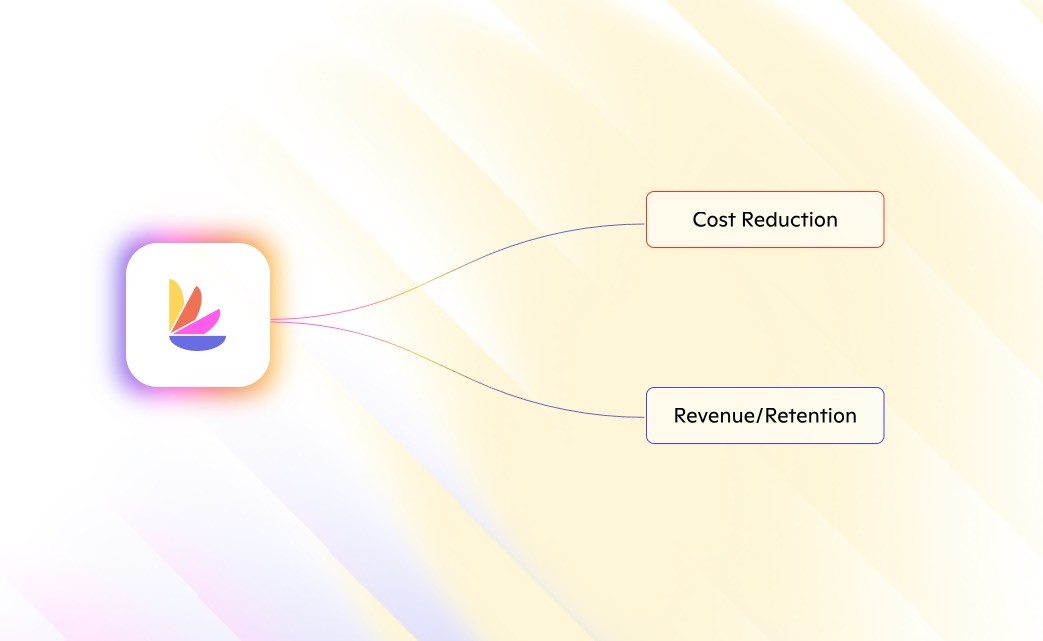
With traditional SaaS you can roughly choose between:
Some upfront cost to create the functionality yourself, and then a smaller maintenance cost, and
An ongoing SaaS fee that is lower than the upfront build cost, but maybe higher than the maintenance cost
With AI agents, the math is different. The models, architectures, and opportunities are constantly changing. Companies who build their own AI agents have to continue to invest heavily – and be willing to do complete rebuilds – in order to continue to have a competitive product. With consumer expectations rapidly changing this risks either cost blowouts, or getting left behind. This is why we think AI agents aren’t “build vs buy” they’re “build, build, build, build, build vs buy”.
The hidden economics of buy vs build
"How hard could this be to build ourselves?" Every smart engineering leader asks some version of this when they see AI agent pricing. It's a fair question. You've got talented engineers. You understand your business better than any vendor. And the demos make it look straightforward – just hook up an LLM to your help center and away you go.
The key thing folks miss (and that we’ve learned over time building Lorikeet) is that AI agents aren’t like SaaS tools. They require a high ongoing level of investment to stay competitive and performant.
The Ship of Theseus problem
Remember that philosophical paradox about the Ship of Theseus, the ship that has all its parts gradually replaced? At all times there’s a ship, but eventually none of the original parts remain. That's a useful framing for considering your AI agent.
The underlying AI tech stack is evolving so rapidly that today's best architecture will likely be obsolete in a couple of quarters. We've seen this firsthand at Lorikeet. What worked six months ago is already antiquated. The models change. The context windows expand. The inference speeds improve. The entire approach to handling complex multi-step reasoning shifts.
This isn't about adding features – it's about rebuilding the core engine repeatedly. Your competitors aren't standing still. The vendor ecosystem isn't standing still. So if you're not constantly rebuilding, you're falling behind.
To give a specific example: we think about a three axis optimization for agents: configuration effort, response latency, and response quality. Until mid 2025 we optimized for response latency and response quality and were willing for configuration effort to be higher. As thinking models emerged and got smarter, and as we found faster inference providers, we re-build our core agent to instead optimize for lower configuration effort and higher response latency (which we manage so there isn’t a user impact). Our core view is you must be willing to do this from-the-ground-up re-thinking on a regular basis to stay competitive.
The real cost calculation
Companies budget for AI agents like they're buying Salesforce or building an internal platform: big upfront investment, then maintenance mode.
But building an AI agent isn't a one-time 3-month project with a team of 5. It's a permanent commitment to that team, forever rebuilding to keep pace. You're not hiring contractors for a project. You're creating a new department.
Think about what your team of 5 engineers costs annually. Now multiply that by...forever. That's your real build cost. Plus infrastructure.
Most importantly, you also need to factor in the opportunity cost of what else those engineers could be building. It is not universally true, but it is broadly true that most companies are better off investing the marginal engineer in making their core product or service better, rather than building CX tools. The key question is: what is critical to our business that we can’t buy?
Most companies budget for "build once + maintenance" when they should budget for "rebuild quarterly + aggressive R&D." The difference between those two numbers should make your CFO sweat. For CFOs, the time to ask these questions is now, not after it’s too late and there’s a team deep in the sunk cost fallacy.
Why vendors have the edge
We spend every waking hour thinking about one thing: making AI agents that deliver an amazing customer experience. That's it. That's all we do.
Your internal team? They're balancing AI development with your actual business. They're dealing with your legacy systems. They're getting pulled into meetings about Q4 planning.
Meanwhile, we're:
Rebuilding our architecture every time a better approach emerges
Amortizing that rebuilding cost across our entire customer base
Testing across millions of real support tickets to understand what actually works
Racing against other vendors who are equally obsessed
Plus – and this is the part no one likes to talk about – VC funding is currently subsidizing the true cost of AI infrastructure. Those GPU costs? The inference pricing? It's all artificially low because vendors are burning cash to capture market share.
When you build internally, you pay full price. Vendors have more flexibility.
The bottom line
The buy vs build decision for AI agents isn't really a decision. It's basic economics.
Unless you believe your CX tooling needs are truly unique and not served by any vendor, you're better off buying. Not because building is hard (though it is), but because building once isn't enough. You have to build, then build again, then build again, then build again...
Partnering with a quality vendor who cares about, and attentive to, your needs is, in our view, the best way forward.